1 white cabbage, preferably organic
1 dsp flaked sea salt
2 tsp black peppercorns (optional)
½ tsp caraway seeds (optional)
- Remove any tired leaves and wash the outside of your cabbage.
- Quarter it, remove the core and slice it thinly.
- Put it in a clean bowl with half the salt. Using clean hands, squeeze it for several minutes. It will become limp and wet. Add more salt if water isn’t being released by the cabbage.
- Add any flavourings, in this case caraway seeds and peppercorns. Squeeze a little more.
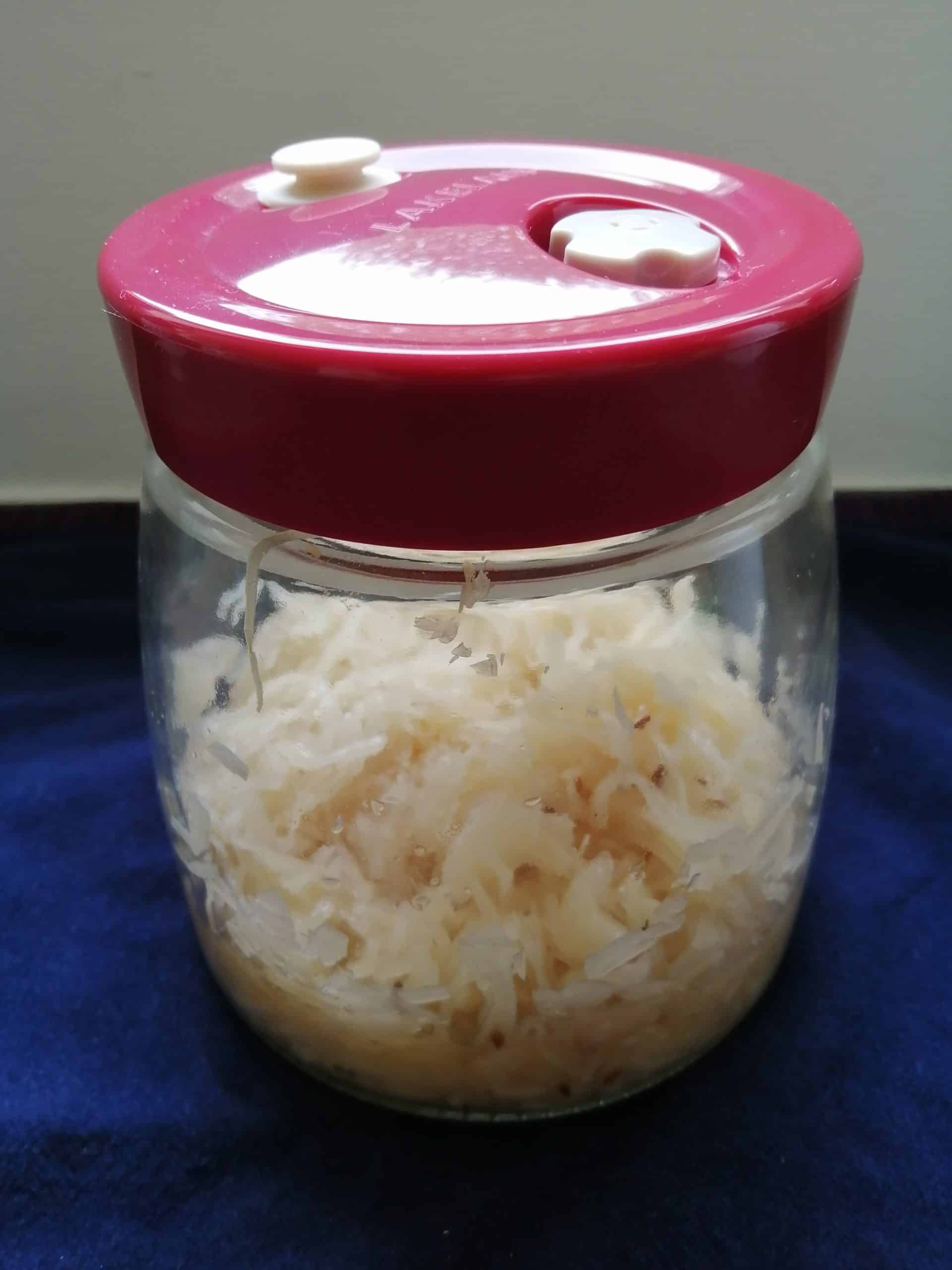
- Transfer it to a very clean jar, pouring in the juices. Press it down with your hands/ a clean rolling pin.
- Lay cling film or a leaf from the outside of the cabbage over the sauerkraut, and put a clean weight on top. The cabbage should be submerged in the juices.
- Cover the jar with a clean cloth and secure the cloth with elastic. This allows gases to escape while preventing germs getting in.
- Leave it out of the sun but not in the fridge. Most of the fermentation takes place in the first 3-4 days. You will see tiny bubbles rising – this is fermentation taking place. It might overflow if you don’t keep an eye on it (push the veg down to release the bubbles.) Once fermentation slows down you can put a proper lid on it to preserve it.
When can you eat it?
We have eaten ours after 4 days but longer is better – try 20 days for a more mature flavour.
Storage.
Unopened it will last for many months, especially if it’s refrigerated. But once you start eating it new bacteria may be introduced so finish it off within 2 weeks.
Signs your sauerkraut hasn’t worked-
If instead of smelling like sauerkraut your cabbage smells off, you should discard it. It should taste sour and should not be pink, grey, black, or mouldy. However, many experienced sauerkraut makers are happy to scrape off a little scum or even mould from the surface knowing the submerged cabbage beneath will be OK. Follow your gut and if in any doubt, throw it away.